
Uzbekistan rising
I'm In Tashkent at the Uzbek flagship investment forum and its booming.

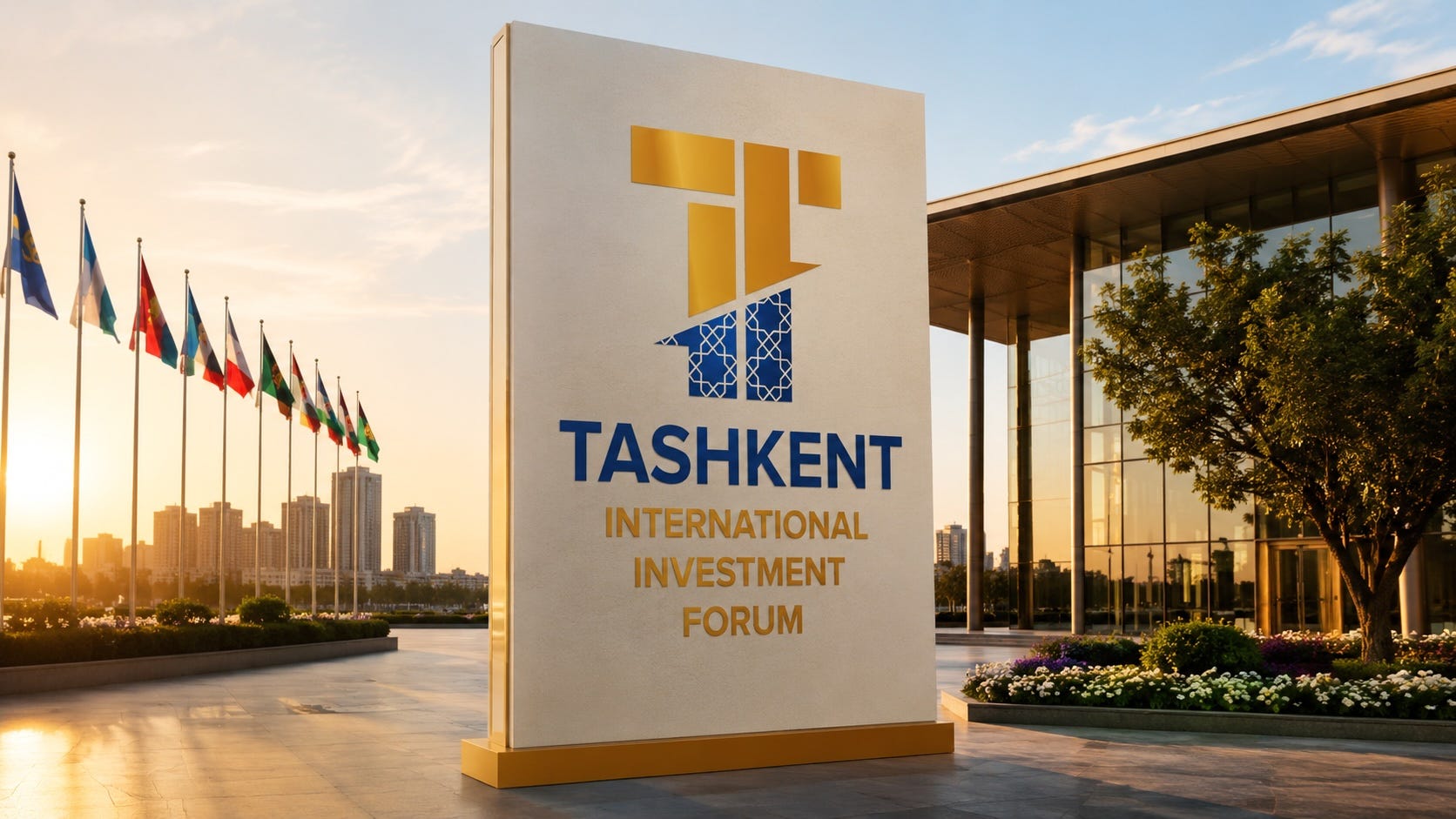
I’m in Uzbekistan for the fifth Tashkent International Investment Forum (TIIF), the country’s flagship investment event and the place is packed with investors from all over.
The Minister for Investments, Trade and Industry Laziz Kudatov said over 3,400 investors, businessmen and politicians from over 120 countries had travelled to the Uzbek capital for the annual flagship event as the country is starting to boom.
“We’re talking about four billion consumers, about six trillion dollars of economic activity,” Acwa (formerly known as ACWA Power) general manager for Uzbekistan, Dr Jon Zaidi, said at a business briefing. “Unlike much of the world, Uzbekistan is surrounded by fast growing countries. Geography has already given Central Asia a seat in the middle of the dinner table. The challenge is to take a bigger share of all of them.”
At the first TIIF in 2022 the original goal was to grow the GDP to $160bn by 2030 but that goal will be hit this year — four years ahead of schedule. The government has set a new 2030 GDP target to $200bn, with a longer-term ambition at $240bn by the end of the decade.
Since Uzbek President Shavkat Mirziyoyev took over in 2016, Uzbekistan’s economy has grown by at least 6% every year, apart from a short pause in 2020 during the pandemic when growth stalled, but even then, Uzbekistan was one of only two countries in the world that did not go into recession. And now that growth is accelerating: last year the economy grew up 7.7% and it shows no signs of slowing down.
And the foreign investment is starting to notice. Foreign investment inflows were up to $39.7bn in 2025, or 31.9% of GDP. Over the past nine years, Uzbekistan has attracted around $120bn in foreign investment, compared with just $4.1bn in 2017 when the reform programme got under way and those numbers are going up every year.
The flagship investment event this year is the IPO of the Uzbekistan National Investment Fund (UzNIF) – a portfolio of stakes some 13 state owned companies – on the LSE, the largest IPO in five years as Uzbekistan makes its international equity market debut. The president just said this morning that a raft of other big companies are being prepared for privatisation and auction this year.
At the same time the economy is healthy and in solid financial health. As a major gold producer it has been squirrelling away gold into reserves that are now $70bn equivalent to about half the size of GDP – a huge cash pile.
The reforms are impressive and the theme that runs through everything is “add value”. When I was first here in 1995 the country used to make a mere $3bn a year from cotton exports. Today its ten-times that much but the key change is Mirziyoyev banned raw cotton exports and forced everyone to make textiles instead and related export revenues went up multi-fold as a result. The president is apply his logic to everything he can.
The other interesting aspect of this TIIF is the multivector foreign policy is on display. Guest include Odile Renaud-Basso is President of the European Bank for Reconstruction and Development (EBRD), who I saw last week in Riga at the bank’s annual meeting. Also the ADB, IFC, European Investment bank, World Bank and a bunch of other western development banks are here. But they were also joined by Russian Prime Minister Mikhail Mishustin, Prime Ministers or Presidents from Albania, Belarus, Tajikistan, Kazakhstan, Kyrgyzstan and so on. Mirziyoyev has been trying to balance his relations between the warring East-West superpowers, but like everywhere else, foreign policy in most regions is regionalising; close ties with neighbours take paramount importance as the globalisation era comes to an end and the values-led ideology gives way to simply doing more business with the countries around you. In Central Asia’s case, that now involves a much more unified regional market and much closer cooperation between the so called C5 – the five presidents of the Stans.
But the change is see is that its all becoming much more organised and rational. One of the new initiatives being launched this year is a council of state investment promotion agencies is being set up. This sounds a bit dull but it’s a concrete and pragmatic step towards creating a Silk Road single market by starting to cooperate on specific investment synchronization issues.
I lived through a similar period in Russia from 2000 onwards that lasted a decade. Of course, Uzbekistan and the other Stans still have a lot of work to do. Banking privatisation, for example, has not started and is long overdue, and like Russia, Mirziyoyev is not even starting to think about liberal political reforms. But like Russia in the noughties, no one cares at this stage. Their time horizon is will it be better next month? And with wages rising steadily as a middle class emerges they will be high. If it plays out like Russia then in a decade people’s time horizon will stretch out to their old age and the focus will change from better pay to better government services. Then the opposition movements will appear. But in the meantime Tashkent will become a party town. I just wish they put on some proper flights so you don’t have to take that plane at arrives at four in the morning or leaves at 3am.